The program was implemented by the Medical University of Lublin from September 2021 to May 2022 in primary schools across the Lublin region.
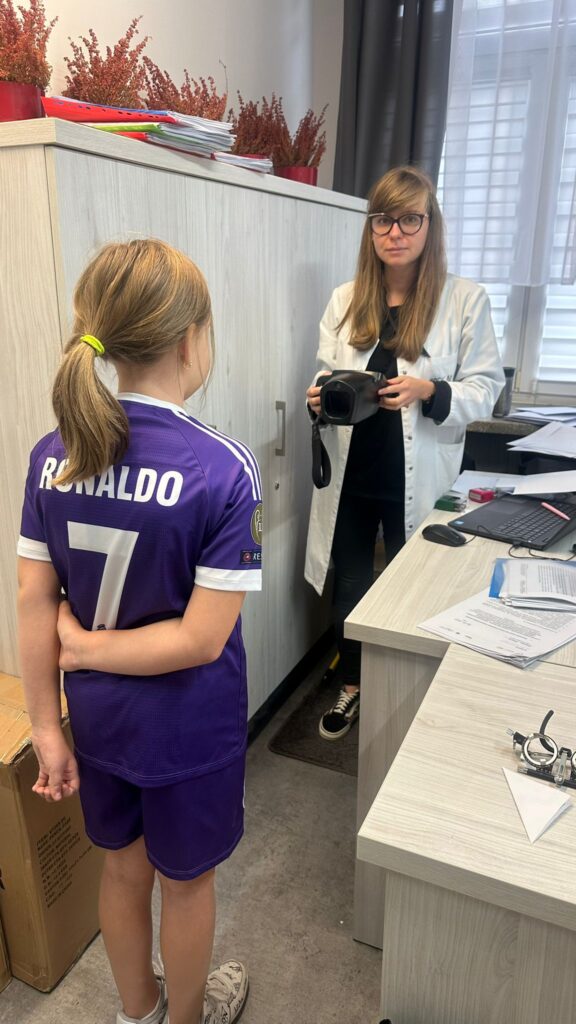
Qualified nursing staff examined 1,048 children aged 7–9 using a handheld autorefractometer and Snellen charts.
In 418 children, visual disturbances or refractive errors were identified that required a full ophthalmological examination. At the Department and Clinic of General Ophthalmology, comprehensive eye examinations were performed on 109 children. Surveyed parents noted that visual disorders were more common in older age groups of children.
Results
Despite the ongoing COVID-19 pandemic, examinations were safely conducted among the planned number of children in forms 1–3 in both rural and urban schools. The selection of the study group resulted from the fact that, during the pilot program, students in higher grades were engaged in remote learning. The initiative received a positive social response, and parents were eager to consent to their children’s participation.
Thanks to the pilot study, it was possible to determine whether and how remote learning affected the increase in vision defects in the examined group of children, and to compare these data with the situation in other countries.
In the study group, hyperopia (farsightedness) was the most prevalent condition, with its frequency decreasing with age. Myopia (nearsightedness) was the least common refractive error; however, its frequency increased with age. During the pilot program, glasses were prescribed for 53 children.
Parents surveyed by the research team again emphasized that visual disorders were more frequent in older age groups of children.
A high level of consistency was highlighted between the results of vision defect screening conducted in schools (handheld Welch Allyn autorefractometers, nursing staff, without pupil dilation) and examinations performed in clinical settings (stationary autorefractometers, ophthalmologists, after pupil dilation). This supports the validity of large-scale school-based screening programs.
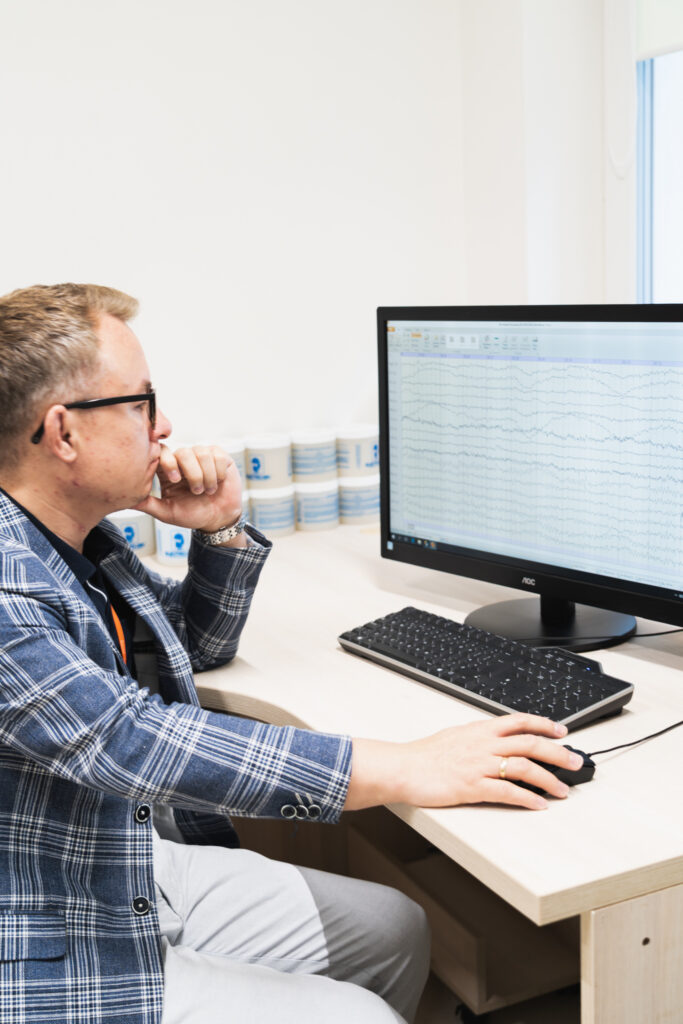
A computer application developed specifically for the program also proved useful. It automatically generates examination reports and determines the need (or lack thereof) for urgent, comprehensive ophthalmological evaluation. This application can be successfully used in the future.
The initiative also had an educational dimension. The project drew attention to the problem of visual disorders in children, who often do not report reduced visual acuity or other vision problems. Support was provided through lectures delivered by ophthalmology specialists (including topics such as eye hygiene, symptoms of visual disorders in children, and prevention of refractive errors) addressed to teachers, parents, and caregivers.
In the future, the use of artificial intelligence systems may further improve screening and help predict the occurrence of certain conditions in children. Given the observed upward trend in myopia with age (similar to trends in other developed countries), it is necessary to extend the study to students in forms 4–8 and in upper secondary schools, who have not yet been examined.
More about the project:
https://umlub.pl/uczelnia/projekty-ze-srodkow-budzetu-panstwa/zakonczone-z-budzetu-panstwa/profilaktyk-krotkowzrocznosci-u-dzieci-z-klas-1-3/
The pilot program for the prevention of myopia among children in forms 1–3 from the Lublin Voivodeship was financed from the state budget by the Minister of Health.