


Paweł Krukow, Associate Professor, MD, from the Department of Clinical Neuropsychiatry at the University Clinical Hospital No. 1 spoke about the work of one of the teams formed as a part of the Lublin Digital Union.
What is the aim of the research you are working on in the LUC project? Why is it important?
Our goal is to assess the psychosocial functioning of students, particularly in terms of the potential consequences of the Covid-19 pandemic and related restrictions, the prevailing mood, interpersonal functioning, including family functioning, and the level of personal maturity. Currently, young adults are exposed to numerous risk factors regarding changes in mental health, which is related to cultural and social changes, and probably also linked to the effects of the Covid-19 pandemic. Therefore, conducting this study on a large group of several hundred students will allow for the assessment of the indicated psychological characteristics, analysis of well-being and the challenges faced by students in terms of developing the psychosocial competences necessary to achieve adulthood. It will also allow to characterise the psychological resources and limitations of students regarding their current functioning in social roles.
What does preparation for the research look like? How did the interdisciplinary team of researchers from the Lublin University of Technology and the Medical University divide their roles?
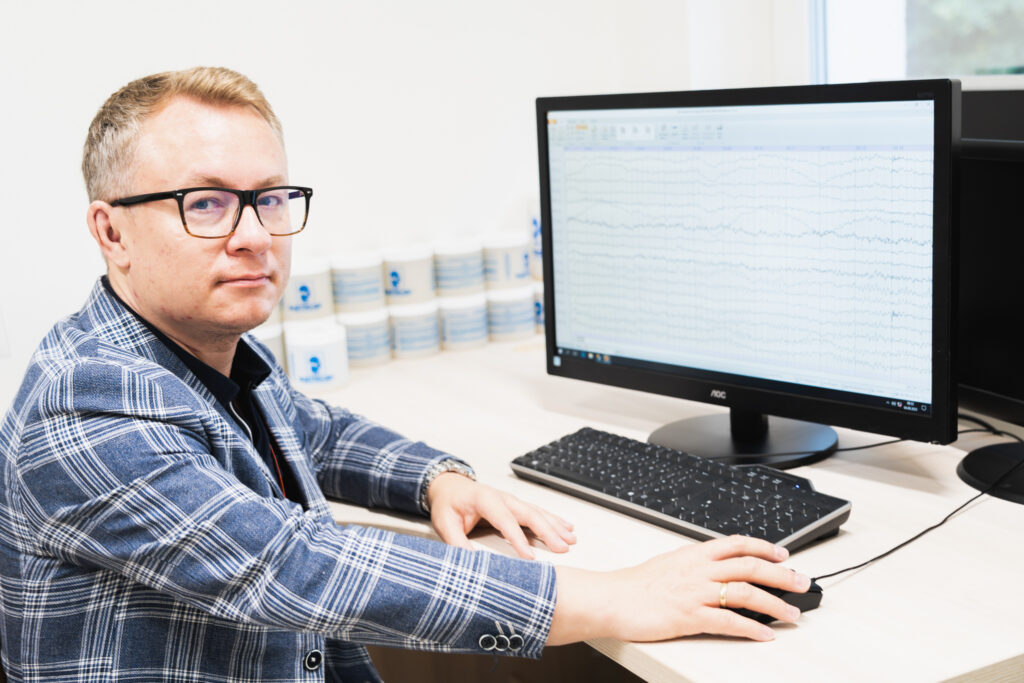
– The study is fully digitised. Providing respondents with questionnaires and psychological scales in a fully digital format and using electronic media such as smartphones and tablets is a nod to the most commonly used mobile devices today. The digitisation of the research process required close cooperation between the team preparing the substantive research methods (a team from the Medical University) and engineers and IT specialists (Lublin University of Technology), who are experts in developing software and applications that enable research using digital methods.
The digitisation of psychological research and diagnosis methods is currently a dominant trend in psychology as a science and in practical psychology. Digital tools are user-friendly for research participants, increase their independence in completing surveys and questionnaires, and significantly speed up the collection and analysis of the collected material.
How can AI help in research?
Artificial Intelligence (AI) is excellent at quickly analysing group results, learning from data and presenting the main conclusions from the research. What is more, AI-based analysis methods sometimes allow for observations that would be impossible to achieve using traditional statistical data processing methods. As mentioned, the entire psychological dimension study is conducted using original applications and software developed in the framework of the project, thanks to close cooperation between specialists from the Medical University and the Lublin University of Technology.
What does the research look like?
The research has already begun and is ongoing.
We encourage first- and second-year students at the Lublin University of Technology to participate.
The study is completely anonymous.
All data is analysed in groups, as we want to characterise a large, representative sample group.
The study works as follows: interested individuals sign up for the study, its main objectives are presented, and the participant’s informed consent is required for the study. Participants may ask the researchers questions while completing the scales, although we encourage them to be fully independent in this regard. Technically speaking, participants read the questions or statements to which they are to respond and select their answers using the digital solution provided, e.g. on a tablet. The answers are recorded automatically. The individual study takes about 30-45 minutes.
Those willing to participate in the survey are invited to register via the website:
https://lubelskauniacyfrowa.eu/zglos-sie-do-programu/formularz-zapisu-studentow/
author: Wioletta Mazur, Umlub