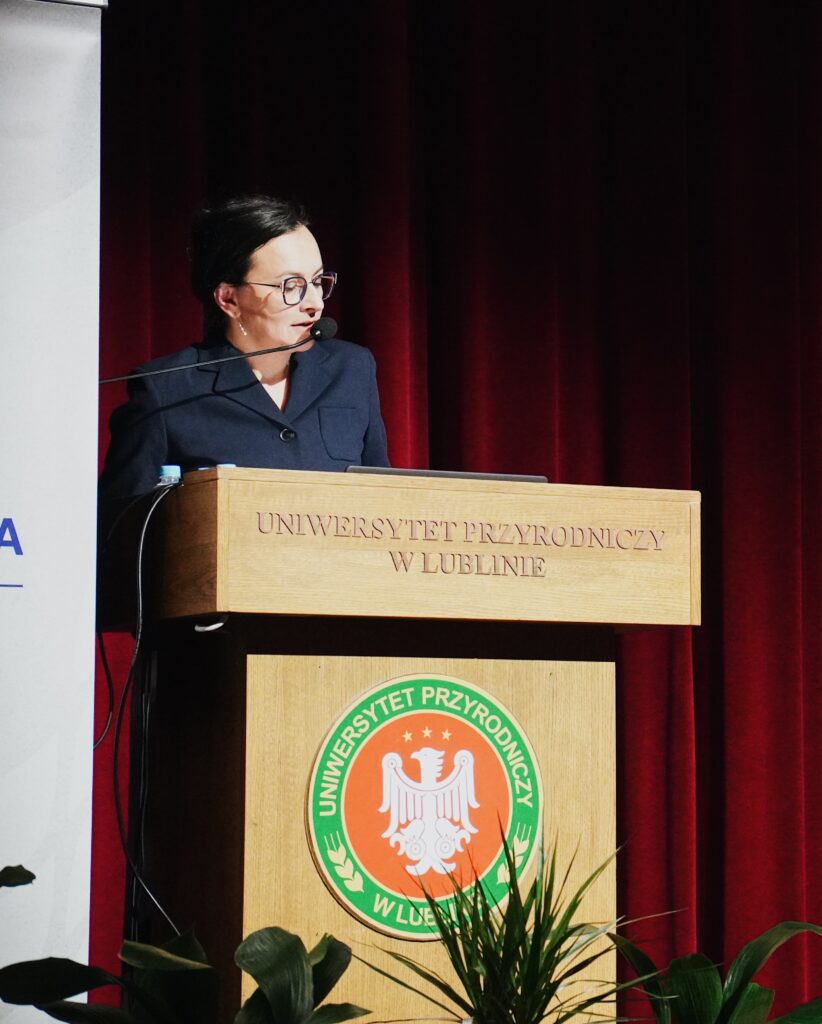
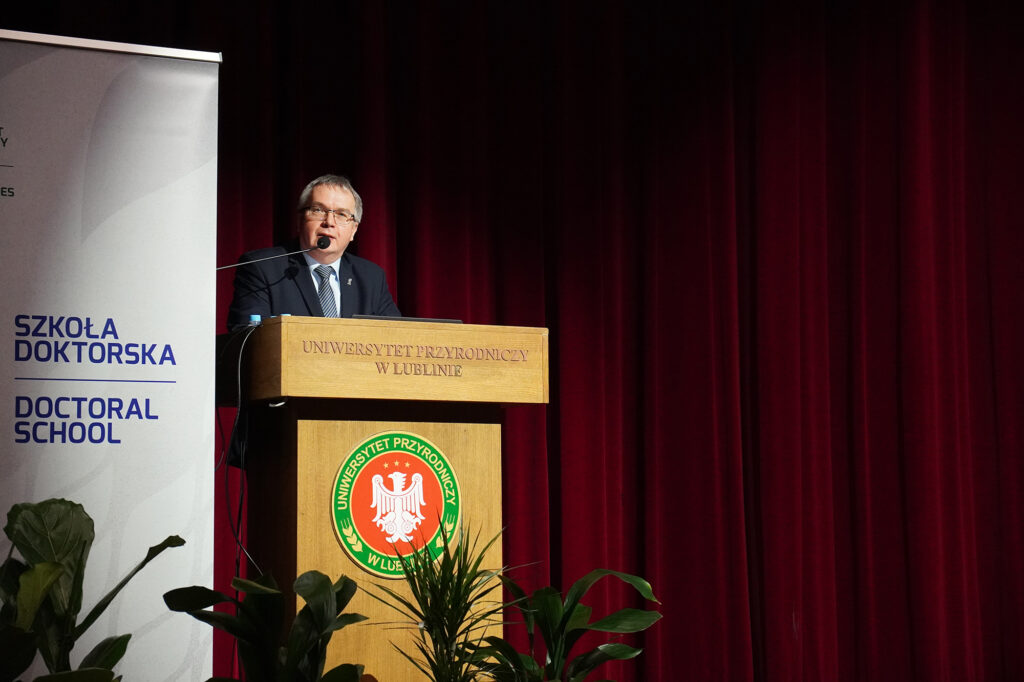
The 4th International Doctoral Conference “Environment-Plant-Animal-Product” was held in a hybrid format on 9 April 2025 at the University of Life Sciences in Lublin.
The event was combined with an information campaign by the Lublin Digital Union.
This is an initiative of three universities in Lublin: the Medical University of Lublin, the Lublin University of Technology and the University of Life Sciences in Lublin, consisting in the joint development of a theoretical model for conducting scientific research using modern technologies, digital solutions and artificial intelligence (AI) in medicine, using ophthalmology as an example, along with testing and implementing this model.
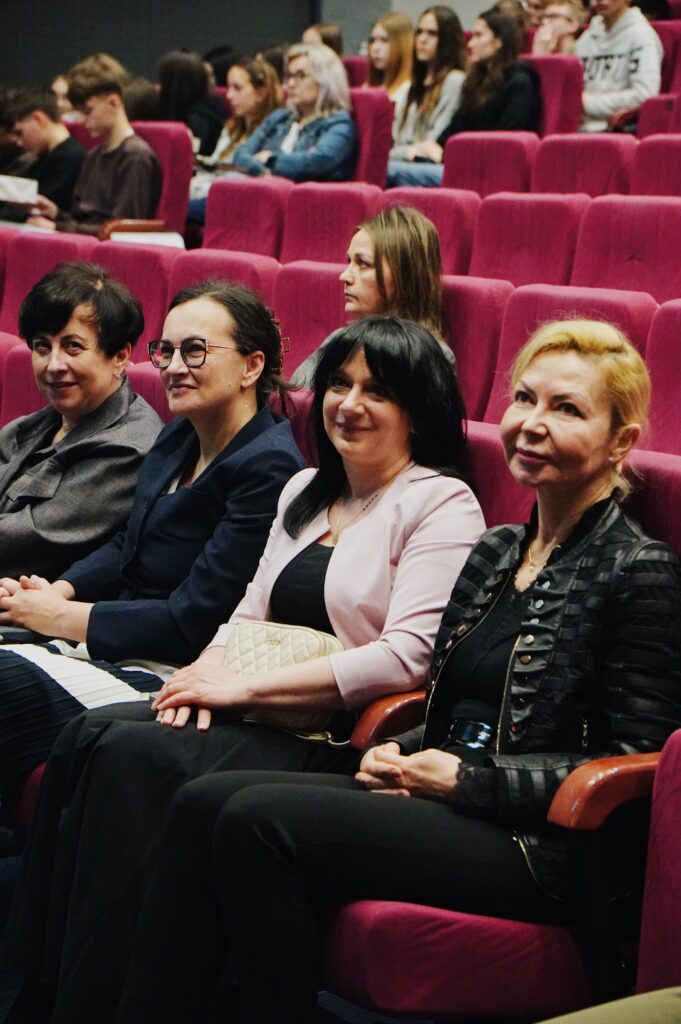
The conference, which brought together representatives of the academic staff of the three universities forming the Digital Union, young doctoral students, and secondary school students from the Lublin region, was devoted to digital solutions and artificial intelligence in science. In addition to presentations at plenary lectures, the results of research conducted as part of the activities of the Lublin Digital Union were presented in poster sessions. The conference was attended by, among others, 400 secondary school students from the Lublin region.
Lectures were given by representatives of universities involved in the work of the LUC project research teams:
Prof. Katarzyna Nowomiejska, MD, PhD, from the Department and Clinic of General and Paediatric Ophthalmology, with a lecture entitled: The use of artificial intelligence in the diagnosis of eye diseases.
“In my presentation, I discussed the use of deep learning in the diagnosis of rare retinal diseases. We already have proven experience in this field! Neural networks help to classify and extract image features that allow a specific diagnosis diagnosis to be offered. In the LUC project, we focus on the most common rare eye disease, namely retinitis pigmentosa. Our research within the project will ultimately cover 200 patients with various mutations of genes involved in the vision process. RD is a very diverse disease. There are different types of inheritance, different mutations in different genes, and different courses of the disease. All this makes it very difficult to identify patterns in the course of the disease. Collaboration within LUC gives us considerable opportunities to gain in-depth knowledge about the specifics of this disease and will allow us to use the potential of artificial intelligence for better diagnosis and, in the future, treatment.”
Prof. Hanna Karakuła-Juchnowicz, MD, PhD, from the First Department of Psychiatry, Psychotherapy and Early Intervention, with a lecture entitled:The brain under stress: Digital stimuli and the mental health of young people.
I raised this issue because young people’s brains are particularly sensitive to environmental influences, and their increasing immersion in the digital world poses a serious risk to their mental health. I wanted to draw attention to issues such as cognitive overload, personality fragmentation, social media addiction, sleep disorders and new threats related to cybercrime. My goal was to show how important it is to be aware, use technology responsibly and take care of digital hygiene in everyday life.”
Prof. Dariusz Czerwiński, PhD, Eng., from the Lublin University of Technology spoke about artificial intelligence, its opportunities and threats in a lecture entitled: AI – opportunity or threat?
Text drafter by: Monika Jarczyk, Medical University of Lublin